5 of My Best Homeschool Tips From 31 Years come down to this: build support, stay organized, follow through, be present, and focus on character over academics. These simple, time-tested habits create a peaceful, consistent homeschool that actually works in real life.

1. Find a friend to encourage you!
Probably one of the BEST things that happened for our homeschool was finding a family that was like-minded and shared many of the same values as we did.
First of all, it was a great encouragement to ME to have a friend that I could talk to. She had kids about the same ages as mine and was also homeschooling. We had so much in common that we really clicked.
This friendship helped me get through some of those “I can’t do it any longer” days. We encouraged and supported each other.

Another equally important benefit is that this friendship gave my kids some friends! We started doing field trips together, getting together for play days at the park, preparing programs that the kids did at the nursing home, etc.
Our kids NEED friends and contact with other kids. For them to be happy in their homeschool, they need homeschool friends with similar values.
Affiliate Disclosure: This blog contains affiliate links. I may earn a small commission at no extra cost to you.

Moms, WE also need friends to encourage us when the going gets rough.
2. Get and stay organized!
Your homeschool is only as organized as you are, Mom. Our kids don’t have the self-discipline to organize their day and plan their school work. God put US in charge of that. However, we can’t teach our children to be organized and have self-discipline when we aren’t a good example.
We can’t get frustrated with them for losing papers and not getting things done when we haven’t set an example for them, or taught them the skills of organization and self-discipline.
School charts were always my best friend. Each “student” had a chart with the subjects that they needed to do daily, as well as any chores around the house, or music practice.
I would fill in their charts for the week on Saturdays, and on Monday morning, they knew to look at their chart to see what pages or assignments to do.
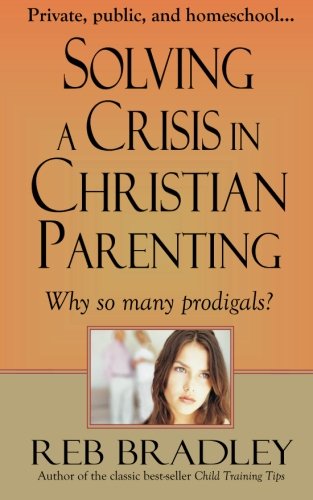
Say Goodbye to Whining, Complaining, and Bad Attitudes... in You and Your Kids Passionate Parenting: Enjoying the Journey of Parenting TeensSolving A Crisis in Christian Parenting: Why so many prodigals?[(Child Training Tips : What I Wish I Knew When My Children Were Young)] [By (author) Reb Bradley] published on (August, 2014)


![[(Child Training Tips : What I Wish I Knew When My Children Were Young)] [By (author) Reb Bradley] published on (August, 2014)](https://m.media-amazon.com/images/I/51SnOcJL+QL._SL500_.jpg)
They liked knowing what they would be doing each day, and sometimes they’d work ahead just to have some free time at the end of the week.
Rewards for getting everything done for the week were a good incentive for those who weren’t quite as motivated.
If you have little ones, it’s VERY important to plan their time and activities as well.
I had older kids assigned to babies/toddlers for 30-minute segments to give me time to work with my early students who still needed my help with their schoolwork.
I also planned the toddler/preschooler’s time with a variety of activities to keep them from getting bored.
Mid-morning, I would have the school kids do independent work so I could spend 30 minutes reading to toddlers, play with the baby, etc. Keeping their love tanks full really makes a difference.
3. Always inspect what you assign.
Along with that, I might add, assume nothing and assign everything! It’s easy to think that our kids will just do their jobs, or practice their piano.
However, we have to train them to have initiative and self-discipline to do what they ought to do.
More than likely, they won’t practice their math facts if you don’t put it on their school chart.
Jobs that aren’t on their charts won’t get done, AND if you don’t check their charts and their jobs, they may not be doing all you think they are. (Ask me how I know!)
Part of training our kids is being faithful to follow up on what they’ve been told to do. When I forget or get too busy to check their charts for a few days, I find they haven’t been doing everything.
They need to know that we will follow-up and that when we make assignments, they better get them done.
Probably the biggest mistake we make is hopping on the computer “just for a minute” while our kids are getting ready to start their schoolwork. Things are quiet, and we think they are working.
An hour later, when we end our “minute” online, we go check on them, and find them in their room playing, or reading books, rather than working.
We shouldn’t be surprised! They are kids and need our supervision and our oversight.
4. Be fully present.
This kind of goes back to the last point.
We MUST give our kids our undivided attention during school hours. This can be hard, as there are many things to distract us, or that we feel we must do right now.
I suggest you turn your cell phone and computer off until school is done. This takes away the temptation to just get on there to check something “real quick.”
It also conveys to your kids that school is important to you and that you are there to help them do their best.
The years go by quickly, and we need to make the most of the time we have by focusing fully on the school work, while also working on character training.

5. Remember that the most important lessons you teach aren’t academics.
Daily, you teach your kids important lessons by the way you live– how you respond to them, to difficulties, to irritations, your attitude, etc.
Our kids learn what is important to us by what it takes to upset us. What are they seeing?
Moms, you are your child’s best teacher. No one else loves your children as you do, and no one knows them as well as you do.
You are teaching ALL the time, not just when you are helping them learn academics. Academics will prepare them for life, but the lessons you teach them daily to build their faith and character are lessons of eternal value.
Quick Review: 5 of My Best Homeschool Tips From 31 Years
- Find a like-minded homeschool friend for support and encouragement
- Stay organized with simple weekly charts and routines
- Always follow up on assignments and responsibilities
- Be fully present during homeschool hours
- Focus on character development over academic perfection
Frequently Asked Questions About Homeschooling
How do I stay consistent with homeschooling?
Start simple. Use routines, write things down, and focus on showing up daily rather than doing everything perfectly.
What if I feel overwhelmed homeschooling multiple kids?
Lean into structure and community. Assign independent work when possible and ask for help when you need it.
Do homeschooled kids need socialization?
Yes. Friendships and shared experiences are important. Look for like-minded families and create opportunities to connect.
After 31 years, I can tell you this with confidence: homeschooling doesn’t have to be complicated to be effective. These 5 of My Best Homeschool Tips From 31 Years are simple, practical, and rooted in what truly matters most.
Related Homeschool Encouragement
7 WAYS TO STAY PRESENT AS A PARENT
7 TIPS FOR HOMESCHOOLING WITH TODDLERS & PRESCHOOLERS
How To Be Successful in Homeschooling & Parenting
How to Teach Your Kids to be Independent Homeschoolers
Super Simple Routines to Reduce Homeschool Mom Stress
VISIT TODAY’S HOMESCHOOL ENCOURAGEMENT & INSPIRATION SERIES SPONSOR BELOW!
Spanish Curriculum for Elementary School, Middle School, and Homeschool Grades 3-8
Spanish for You! is a Spanish curriculum that provides a way for anyone to implement an effective elementary or middle school Spanish program in the home, classroom, or homeschool co-op easily and affordably.

Don’t miss the rest of the posts in the series!