Are you looking for tips for teaching first-time obedience to your children, or restoring obedience after realizing that you haven’t been requiring it as you should?
I shared this quote on my Facebook page recently, regarding the importance of obedience:
The best curriculum won’t work with a child who has not been trained in the habit of obedience. Your child must learn to obey or you can never serve as his teacher!
Several of my readers then messaged me asking me if I could give some specific ideas to help them, as they were having trouble getting their children to obey.
Those requests inspired me to write this post for those times when you are struggling as a parent to teach your child to obey or get them back in the habit when you have let obedience slide.

Learn 15 Crucial Tips for First Time Obedience!


When our kids were very young, my husband and I worked hard to teach them the importance of obeying the first time they were told to do something. It took a lot of training, practice, and reminding, but we felt that first-time obedience was vital for two reasons:
- We wanted them to learn to obey the first time, so when God spoke to them they would obey Him without question.
- Safety reasons.
If they were about to run in front of a car, we couldn’t risk them waiting till the 3rd time we said “Stop!” Or if they were about to touch a hot stove, they needed to know that when we said “don’t touch!” they should immediately stop.
Affiliate Disclosure: This blog contains affiliate links. I may earn a small commission at no extra cost to you.

In reality, if our kids can obey us the 3rd or 4th time we tell them something, they have the ability to obey the FIRST time, so why not require it?
Related: Is Your Parenting Leading Your Kids To Rebellion?
Picture the parents who use the “1, 2, 3” method. Their child has been trained that they don’t have to move or obey right away, but can wait till right before Mom or Dad says “3”. Repeating your commands or threatening them like this, trains them to disobey.
Children who wait till we have raised our voice, threatened, or told them something several times, do so because they’ve been “programmed” or trained that way by the parents. We shouldn’t get angry with them, since we have unknowingly trained them to wait to obey. (Are You An Angry Parent?)
So what should you do if your children are in the habit of not obeying the first time you speak to them?
Don’t get angry, but realize that either they are still young and in training, OR that you have unintentionally trained them to disobey.

Say Goodbye to Whining, Complaining, and Bad Attitudes... in You and Your Kids Passionate Parenting: Enjoying the Journey of Parenting TeensSolving A Crisis in Christian Parenting: Why so many prodigals?[(Child Training Tips : What I Wish I Knew When My Children Were Young)] [By (author) Reb Bradley] published on (August, 2014)

![[(Child Training Tips : What I Wish I Knew When My Children Were Young)] [By (author) Reb Bradley] published on (August, 2014)](https://m.media-amazon.com/images/I/51SnOcJL+QL._SL500_.jpg)
At that point, it’s up to YOU to have the self-discipline to break the habit of repeating instructions. In either instance, patience will be required, as training is still in progress.
15 Tips For First-Time Obedience

1. Sit down and talk to them about the problem.
Take the blame, and let them know that God says that children should obey their parents. They need to understand that when they wait to do what they are told, it’s not obedience. (Obedience is doing what you’re told, right away, with a good attitude.)
2. Explain and give examples of right and wrong responses when they are told to do something.
Then PRACTICE right responses. This is especially important for younger kids. We would turn it into a game, and clap and praise when they responded right during our practice sessions.
3. Pray with them asking God to help them to obey right away, and to help you, the parent, be consistent, as well.
4. Let them know that for the next few days you will remind them when their response is wrong (disobedient). Then ask them to try again.
Bad habits take time to change, so we can’t just expect them to instantly start responding right if we have allowed them to wait till the 3rd or 4th time.
5. Consider a character chart, where you give stickers each time you catch them responding right.
Positive reinforcement is always my first choice for encouraging changes in behavior. Have a reward when a certain number of stickers have been earned. (Get our FREE character charts!)
6. After a few days of reminding, and practicing the correct behavior, let them know that you now EXPECT them to continue this way without reminders.
Set them up for success by giving some easy or fun commands early in the day, then praising the obedience. This will make the other kids eager to try, and also serve as a reminder of what is now expected.

7. Determine an appropriate consequence for disobedience, and let the kids know in advance what it is.
Then when they “forget” and don’t obey the first time, you can calmly call them aside and talk to them about it, and remind them of the consequence they will receive because of their disobedience.
8. Be consistent, and don’t fall back into the old habit of telling them often, or threatening and raising your voice.
When you aren’t consistent, they learn to take chances. It’s not fair to make them wonder each day if you are going to be strict, or if one or two of them might get away with pushing the limits. Consistency will lead to frustration free discipline.
9. Be sure and show grace when needed.
If a child is doing very well, but is having a bad day and messes up, determine whether it’s out of rebellion, or more of an immaturity issue that needs to be worked on.
10. If you are going through an extra busy time, or for some reason DO find that you have fallen back into the habit of giving orders more than once, or yelling to get the kids to listen, call another family meeting.
Admit that you haven’t been training them to obey as you should, apologize for your inconsistency, and once again have a few days of training and practice.
It’s easy to gradually let things slip, and we all are prone to it. Don’t get discouraged, and don’t get angry with the kids. Realize the need to address the issue, and ask God to help you to be consistent!
11. Listen to your child.
If you want your child to obey you, you need to lead by example. This doesn’t mean you need to “obey” your child, but it does mean that you should demonstrate to your child that you listen when they speak and react positively and quickly to what they say.
12. Don’t Compromise.
We encourage compromise in our marriages and relationships, but our children need very clear boundaries when it comes to discipline. If you compromise when your child is misbehaving, this will teach them that your rules are bendable. You want to establish that you will not compromise when it comes to their safety and well-being.
13. Make family roles clear.
We as parents need to put our relationship with our spouse FIRST, then our children. Why? This teaches our children that while they have a very important role in the family dynamic, they are not THE most important person in the household. When a child thinks they are the most valuable member of the family, they don’t necessarily see a need to obey, because they think they call the shots. So nurture that marriage first, and model to your child a solid foundation that they get to be a part of.
14. Create a schedule for your children to stick to.
Bored kids tend to get into more trouble. Having a routine, especially when you homeschool gives healthy boundaries for your child, while also filling their time with constructive and positive activities.
15. Create a unified front for your children.
As we talked about above, you and your spouse must be on the same page. You also need to be certain that you agree 100% when it comes to discipline and character building in your kids so that you can support each other and back each other up when issues arise. If one of you compromises on the rules, it teaches the kids that the other parent’s rules don’t need to be followed, or are unimportant. So be sure you see eye to eye on all things discipline.
Do you want to reinforce first-time obedience in a positive way?
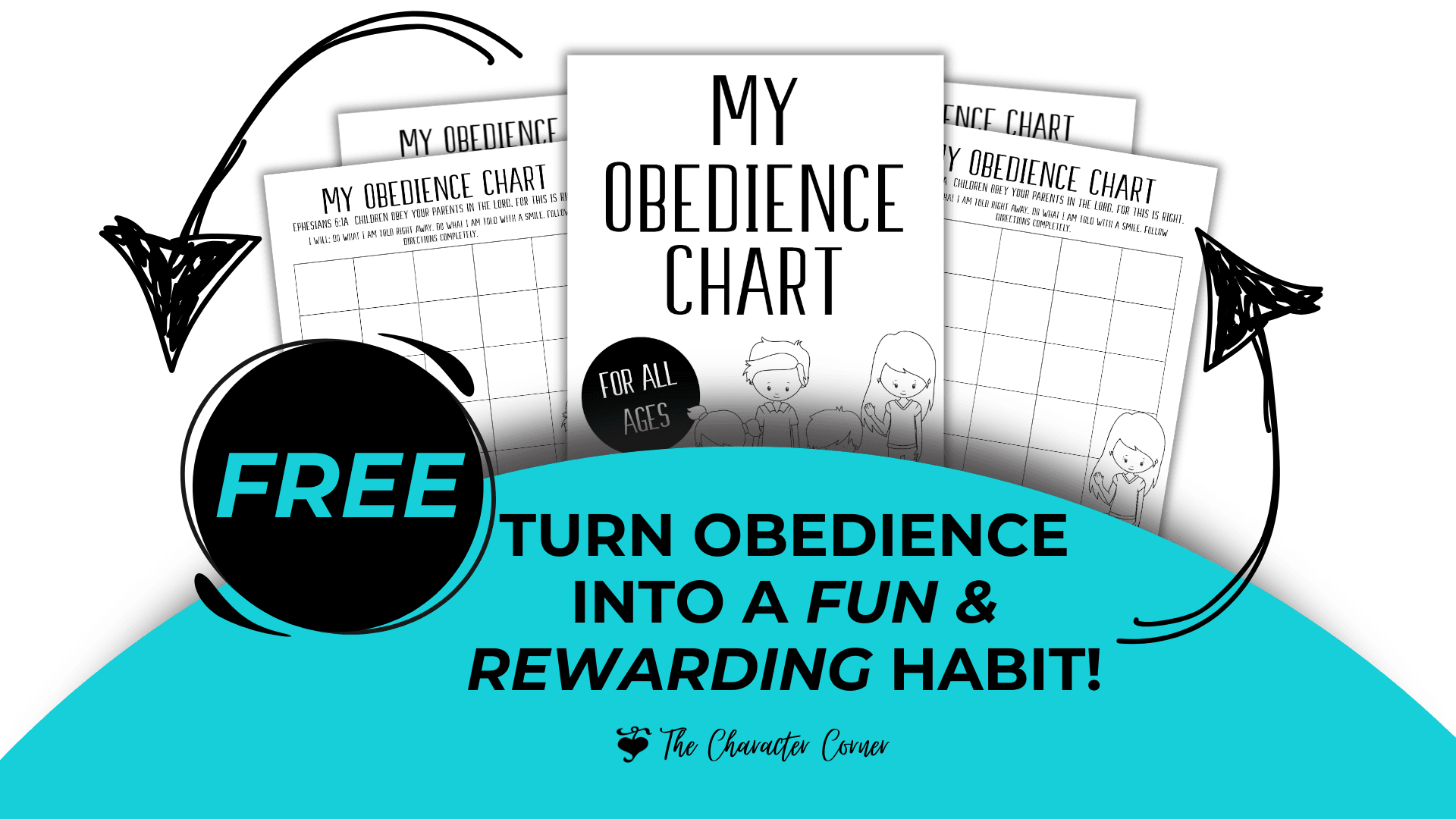
I have the perfect (FREE!) tool for you – an Obedience Chart to use with your kids!